


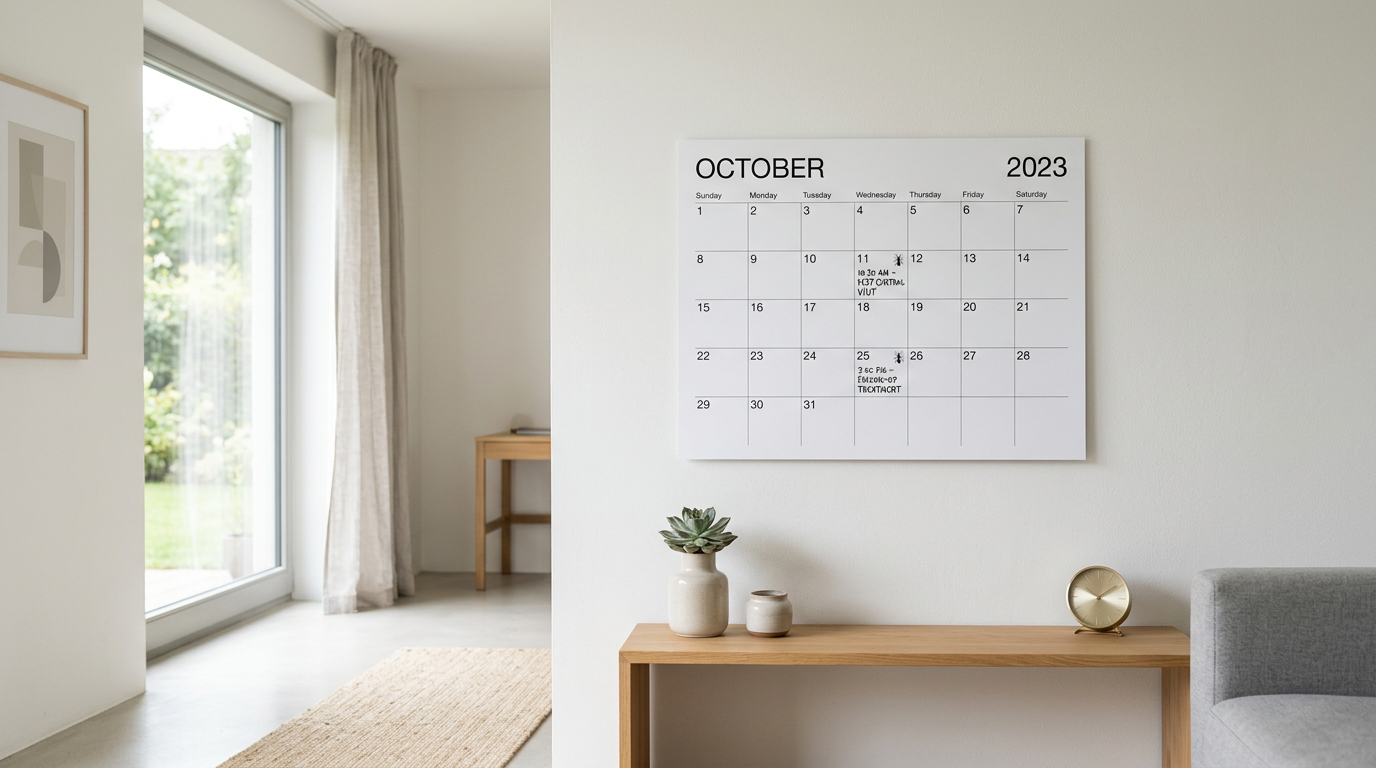

When to schedule follow-up pest control depends entirely on the pest species, treatment method, and environmental conditions in your Dubai property. As Head of Operations at Saniservice Dubai, I’ve found that most property owners schedule follow-up treatments either too early or too late, compromising the effectiveness of their pest management programme. The correct timing balances pest biology, pesticide residual activity, and monitoring results to ensure complete elimination without unnecessary treatments.
In Dubai’s climate, where air conditioning creates consistent indoor temperatures year-round, pest reproduction cycles continue uninterrupted. This means follow-up scheduling must account for egg hatching periods, pesticide degradation rates, and ongoing monitoring data. Whether you’re dealing with German cockroaches in a Dubai apartment, bed bugs in a hotel, or rodents in a warehouse, understanding when to schedule follow-up pest control is the difference between temporary relief and permanent solution.
Understanding When to Schedule Follow-up Pest Control
Understanding when to schedule follow-up pest control begins with recognising that most pest treatments are not single-event solutions. In Dubai properties, where pests have adapted to air-conditioned environments, follow-up treatments address several critical factors: eliminating newly hatched insects that survived initial treatment, catching pests that were away from treatment areas during initial application, and reinforcing barrier treatments that may have degraded.
The fundamental principle for when to schedule follow-up pest control involves the pest’s reproductive cycle. Most insects have eggs that are resistant to pesticides, meaning the initial treatment kills active adults and nymphs but leaves eggs untouched. These eggs will hatch days or weeks later, requiring a follow-up treatment timed to intercept the new generation before they mature and reproduce. In Dubai’s consistent indoor climate, these cycles are predictable and should guide your scheduling decisions.
Another consideration for when to schedule follow-up pest control is the residual activity of the pesticides used. Different active ingredients have varying durations of effectiveness, from a few days to several months. Professional pest controllers in Dubai select products based on the specific pest problem and expected follow-up schedule, ensuring continuous protection between treatments without unnecessary chemical application.
Schedule Follow-up Pest Control: German Cockroach Follow-up Treatment Schedule
German cockroaches present one of the most structured requirements for when to schedule follow-up pest control. These pests reproduce rapidly in Dubai’s kitchen environments, with egg cases (oothecae) hatching approximately 28 days after formation. The standard protocol involves initial treatment followed by two strategic follow-ups at 14-day intervals.
The first follow-up for German cockroaches should occur 10-14 days after initial treatment. This timing is critical because it intercepts nymphs that have hatched from eggs that survived the first treatment. These nymphs are more vulnerable to insecticides than eggs but haven’t yet reached reproductive maturity. The second follow-up, another 14 days later, catches any remaining nymphs and reinforces bait placements that may have been consumed or degraded.
In severe German cockroach infestations in Dubai apartments and restaurants, we sometimes recommend a third follow-up treatment at 14-day intervals. This aggressive approach ensures complete elimination of populations that may have developed insecticide resistance or are occupying hard-to-reach areas behind appliances and within wall voids. Monitoring with sticky traps between treatments helps verify whether additional follow-ups are necessary.
Schedule Follow-up Pest Control: Bed Bug Follow-up Treatment Timing
Bed bugs require careful consideration for when to schedule follow-up pest control due to their hidden behaviour and egg viability. Unlike cockroaches, bed bug eggs hatch in approximately 6-10 days in Dubai’s air-conditioned environments, but the complete life cycle takes longer to complete. Standard practice involves follow-up treatments at 7-10 day intervals for at least three treatments.
The first follow-up for bed bugs should occur 7-10 days after initial treatment. This timing targets newly hatched nymphs that emerged from eggs laid before the initial treatment. These nymphs are vulnerable to insecticides but may have hatched after the residual effects of the first treatment diminished. The second follow-up, another 7-10 days later, catches any remaining nymphs and addresses bugs that may have been in inaccessible areas during previous treatments.
For heat treatments, the schedule for when to schedule follow-up pest control differs significantly. Since heat treatments theoretically kill all life stages simultaneously, the follow-up is primarily a verification visit 14 days later. However, in Dubai’s mixed-environment properties where items may have been missed during heat preparation, we often recommend a chemical follow-up 7 days post-heat treatment to address any survivors.
Rodent Control Follow-up Schedule
Rodent control follows a different logic for when to schedule follow-up pest control compared to insects. Since rodents don’t have resistant egg stages, follow-ups focus on monitoring bait consumption, identifying new entry points, and addressing any survivors that may be bait-shy. The standard schedule involves follow-up visits at 7-day intervals until activity ceases.
The first follow-up for rodents should occur 5-7 days after initial treatment. During this visit, technicians check bait stations for consumption, which indicates whether rodents are accepting the bait and whether the population size matches initial assessments. They also look for new droppings and gnaw marks that might indicate ongoing activity or new entry points that need sealing.
Subsequent follow-ups continue weekly until no signs of activity are detected for two consecutive visits. In Dubai’s warehouse and villa environments, where rodents often have multiple access points from surrounding areas, we sometimes recommend monthly monitoring follow-ups even after elimination to prevent re-infestation. This proactive approach to when to schedule follow-up pest control prevents problems before they become full infestations.
Ant and Flying Insect Follow-up Treatments
Ant colonies and flying insects require specific timing considerations for when to schedule follow-up pest control. Ant treatments often involve baiting strategies that work slowly to eliminate entire colonies, while flying insect treatments focus on breaking breeding cycles. The follow-up schedule varies significantly based on the species and treatment approach.
For ant infestations, the first follow-up should occur 7-14 days after initial treatment. This allows time for worker ants to transport bait back to the colony and distribute it to the queen and other members. During this visit, technicians assess bait consumption, look for reduced ant activity, and may apply additional bait or barrier treatments if needed. A second follow-up 14-21 days later verifies colony elimination.
Flying insects like flies and mosquitoes require follow-ups based on their breeding cycles. For fly control in Dubai restaurants, weekly follow-ups during peak season help break the breeding cycle by treating larvae sites before adults emerge. Mosquito control in villa gardens typically involves bi-weekly follow-ups during breeding season to treat standing water sources and apply barrier treatments before new generations emerge.
Factors Affecting Follow-up Treatment Timing
Several Dubai-specific factors influence when to schedule follow-up pest control beyond standard biological timelines. The most significant is air conditioning, which maintains consistent temperatures that can accelerate pest reproduction compared to seasonal climates. This often shortens the ideal follow-up interval for many pests.
Building materials and construction styles common in Dubai also affect when to schedule follow-up pest control. Glass and steel high-rises have different pest behaviour patterns compared to villas with landscaped gardens. High-rises may require more frequent follow-ups for German cockroaches that travel through utility lines, while villas need regular follow-ups for ants and rodents entering from outdoor areas.
Sanitation practices and occupant behaviour significantly impact when to schedule follow-up pest control. Properties with poor sanitation may require more frequent follow-ups as ongoing food sources sustain pest populations between treatments. We often recommend additional follow-ups for restaurants, hotels, and residential properties where cleaning practices may inadvertently create pest attractions.
Monitoring Before Scheduling Follow-up
Effective decision-making about when to schedule follow-up pest control relies on proper monitoring between treatments. Rather than following rigid calendar schedules, the best approach uses monitoring data to determine when follow-up is actually needed. This evidence-based approach prevents unnecessary treatments while ensuring problems are addressed promptly.
For cockroaches, we use sticky traps placed in strategic locations and checked weekly. Increasing trap counts indicate the need for follow-up treatment, while decreasing counts suggest the treatment is working and follow-up can be scheduled according to the standard biological timeline. This monitoring-based approach to when to schedule follow-up pest control is particularly effective in Dubai office buildings and apartments.
Rodent monitoring involves checking bait stations for consumption, looking for fresh droppings, and using tracking dust to identify activity patterns. These indicators provide concrete evidence about whether and when to schedule follow-up pest control. In commercial settings, digital monitoring systems can provide real-time data that helps optimize follow-up scheduling based on actual pest activity rather than assumptions.
Professional vs DIY Follow-up Scheduling
The approach to when to schedule follow-up pest control differs significantly between professional services and DIY treatments. Professional pest controllers have access to monitoring data, product knowledge, and experience that informs optimal timing. DIY users often miss critical signs that indicate when follow-up is needed.
Professional pest control companies in Dubai typically build follow-up schedules into their service agreements. A standard annual contract might include quarterly treatments with additional follow-ups as needed based on monitoring results. This structured approach to when to schedule follow-up pest control ensures continuous protection without over-treatment.
DIY users often struggle with when to schedule follow-up pest control because they lack monitoring tools and experience interpreting signs of ongoing activity. Many DIY treatments fail because users don’t schedule follow-ups at the right intervals or miss subtle signs that pests are still present. Without proper knowledge of pest biology and product residuals, DIY users often treat either too frequently or not enough.
Expert Tips for Follow-up Pest Control
Based on thousands of pest cases in Dubai properties, here are my professional recommendations for when to schedule follow-up pest control:
- Always schedule the first follow-up within 7-14 days of initial treatment, depending on pest species
- Use monitoring devices between treatments to inform follow-up timing decisions
- Consider environmental factors like temperature, humidity, and sanitation that affect pest reproduction rates
- Document each treatment date and observations to track patterns over time
- Schedule follow-ups during periods of observed peak activity for the specific pest
- Don’t skip follow-ups even if pest activity appears to have ceased – eggs may still hatch
- Coordinate follow-up timing with cleaning schedules to avoid removing treatments prematurely
- Consider seasonal variations even in climate-controlled Dubai properties
FAQ: Follow-up Pest Control Questions
How soon after initial treatment should I schedule follow-up pest control?
For most insects, schedule the first follow-up 7-14 days after initial treatment. This timing intercepts newly hatched nymphs from eggs that survived the first treatment. German cockroaches specifically require 14-day intervals, while bed bugs need 7-10 day follow-ups for multiple treatments.
Can I schedule follow-up pest control too early?
Yes, scheduling follow-up too early can be ineffective and wasteful. Treatments applied before eggs have hatched may miss the new generation entirely. Additionally, applying chemicals too frequently can promote pesticide resistance and unnecessarily expose occupants to treatments.
What if I still see pests after follow-up treatment?
Continued pest activity after follow-up treatment indicates either incorrect product application, missed harborage areas, or a more severe infestation than initially assessed. Professional pest controllers should reassess the situation and adjust the treatment strategy and follow-up schedule accordingly.
How many follow-up treatments are typically needed?
Most infestations require 2-3 follow-up treatments at properly spaced intervals. Severe infestations or challenging environments may require additional follow-ups. Rodent control typically continues until monitoring shows no activity for two consecutive weekly checks.
Should follow-up schedule change with seasons in Dubai?
Even in climate-controlled Dubai properties, seasonal changes affect pest behavior. Outdoor pests like ants and mosquitoes may require more frequent follow-ups during cooler months when they seek indoor shelter. Professional pest controllers adjust schedules based on seasonal patterns.
Determining when to schedule follow-up pest control requires understanding pest biology, treatment methods, and environmental factors specific to your Dubai property. The most effective approach combines standard biological timelines with evidence from monitoring devices to schedule follow-ups precisely when they’re needed. Whether you’re dealing with cockroaches, bed bugs, rodents, or ants, proper follow-up timing is the key to complete elimination and long-term prevention. Remember that professional pest controllers have the experience and tools to optimize follow-up scheduling for your specific situation.